
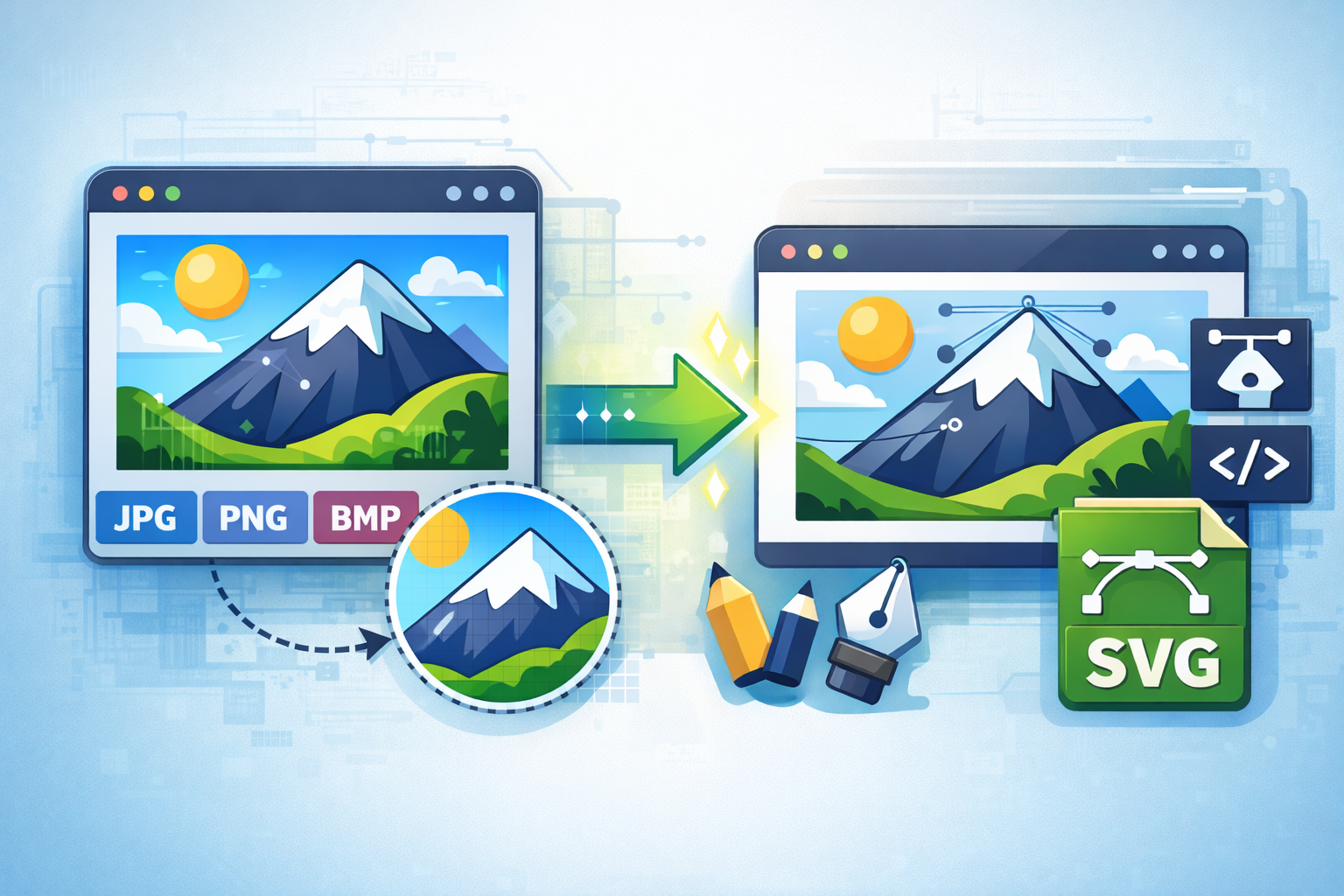
Introduction to Image Format Conversion
Images play an essential part in the digital world of communication. If you’re developing a site or creating posts for social media or making professionally-designed presentations, the style of your images are crucial. This is where the Step-by-Step Guide for Converting Images to Formats is extremely useful.
Conversion of images is the procedure of changing a image from a particular format into the other, such as changing an image from a PNG file into JPEG or converting an TIFF image to WebP. Each format has strengths but also weaknesses and optimal scenarios for use. If you know how to correctly convert image formats you can increase compatibility between files, reduce sizes, and keep the high-quality images.
For instance, owners of websites frequently convert large images to smaller formats, such as WebP to speed up the speed of loading pages. Graphic designers can convert images to PNG to preserve the transparency. Photographers typically employ JPEG to store images in a way that is efficient and for sharing.
The good news is that image conversion is now simpler than ever because of modern software and tools. Nowadays, it is possible to convert images using desktop software or mobile apps, and even basic websites without installing any software.
This Step-by-Step guide to Converting Images Formats will guide you through everything you need to know, from understanding the different formats of files to selecting the best tools to avoid common errors.
When you’re done with this article, you’ll possess the ability and know-how to convert images swiftly efficiently and effectively, without loss of quality.
Understanding Image File Formats
Before you convert images, it is essential to know the various formats for files and the way they function.
JPEG vs PNG vs GIF vs WebP
Different image formats serve different purposes. we’re here to help you grow stronger mentally and emotionally. is a list of some widely used formats:
JPEG (JPG)
-
Ideal for photography
-
Smaller file size
-
Uses lossy compression
-
There is no support for transparency
PNG
-
Promotes Transparency
-
Higher image quality
-
A larger file size is available than JPEG
-
Perfect for logos and graphics
GIF
-
Animation support
-
Limited to 256 colors
-
Most often, they are used to create simple animations
WebP
-
Modern format developed for web optimization
-
Smaller file sizes, with excellent quality
-
It supports transparency and animation.
Each format comes with its own advantages. For example, WebP can significantly reduce the time it takes to load a website when compared the other formats like PNG and JPEG.
For further technical details about image formats, you can explore resources such as
https://developer.mozilla.org/en-US/docs/Web/Media/Formats/Image_types
Raster vs Vector Images
Another significant difference regarding image file formats that of the vector and raster image formats.
Raster Images
-
Filled with pixels
-
Examples: JPEG, PNG, GIF
-
Quality is reduced when the size is resized.
Vector Images
-
Created using mathematical pathways
-
Examples: SVG, AI, EPS
-
Can be scaled infinitely without compromising quality
Images in the form of vectors are often used for photography, whereas vector images are great for icons, logos and illustrations.
Why Image Format Conversion Matters
Conversion of images is more than an a technical process, it has many advantages.
Improving Website Performance
Large images can slow websites. When you convert images to optimized formats like WebP You can cut down on the size of files, but not sacrifice quality. Speedier websites result in more user satisfaction and better ranking in search engines.
Compatibility Across Platforms
Some devices or platforms don’t support every image format. Converting images guarantees that they will work everywhere, from tablets and smartphones to desktop apps.
For instance:
-
Some websites use JPEG
-
Modern browsers support WebP
-
Graphic design tools could require PNG
By conversion, you will ensure that your images are easily accessible and useable in different environments.
Step-by-Step Guide to Converting Image Formats
We’ll now walk through the entire procedure in this Step-by-Step guide to Converting Images to Image Formats.
Step 1: Identify the Current Image Format
Start by looking at the layout of your photo.
It is possible to do this using:
-
When you look at the extension of the file (.jpg, .png, .gif)
-
Checking file properties
-
Open the image in editing software
Understanding the original format can help determine the best method for conversion.
Step 2: Choose the Right Target Format
The choice of the right output format is essential.
Think about the following points:
| Purpose | Recommended Format |
|---|---|
| Photography | JPEG |
| Logos & graphics | PNG |
| Web performance | WebP |
| Animation | GIF |
| Graphics that scale | SVG |
Always ensure that the format is in line with the purpose for which it was intended.
Step 3: Select a Conversion Tool
There are numerous ways to convert images
Online Tools
-
Browser-based
-
Simple and quick
-
No installation required
Desktop Software
-
Advanced features
-
It is better to convert batches
Mobile Apps
-
The device is convenient for editing while on the move.
Some of the most popular choices are Photoshop, GIMP, and online converters.
Step 4: Adjust Image Settings
Before you convert, you may need to alter settings like:
-
Image quality
-
Compression level
-
Resolution
-
Color depth
These adjustments allow for maintaining the equilibrium between file size and image quality.
Step 5: Convert and Download
Finally:
-
Upload the image
-
Select the format you want to use.
-
Change settings
-
Click to convert
-
Download the updated file
The image you converted is now available for use.
Best Tools for Image Format Conversion
Online Conversion Tools
Online tools are excellent to convert quickly.
Benefits include:
-
Easy to use
-
No installation required
-
Accessible to any device
Examples include converters that are based on browsers as well as cloud-based editing platforms.
Desktop Software
Professional users usually prefer desktop-based tools.
Benefits include:
-
Batch conversion
-
Advanced editing capabilities
-
More performance
The most popular tools are Photoshop, GIMP, and image editors.
Mobile Apps
Smartphones can also convert images by using apps that allow editing, resizing, as well as formatting modifications.
These apps are beneficial for those who create social media content and are working directly from their phones.
Optimizing Images After Conversion
Converting images is just one aspect of the entire process.
Compression Techniques
Compression decreases the size of files while preserving an acceptable image quality.
Methods can include:
-
Lossy compression
-
Compression that is lossless
-
Smart compression algorithms
Maintaining Image Quality
To avoid loss of quality:
-
Beware of multiple conversions
-
Utilize high-resolution originals
-
Select the appropriate compression settings
Common Mistakes to Avoid
Many people make blunders in image conversion.
Avoid these common mistakes:
-
Converting images multiple times This reduces the quality.
-
The incorrect format could cause performance issues.
-
Doing nothing to adjust compression settings can result in unnecessarily huge files.
-
The upscaling of low-resolution images can cause pixelation.
-
Forgetting transparency needs – JPEG removes transparency.
Be aware of these issues and aid you in maintaining professional images.
Advanced Tips for Professional Image Conversion
For users who are advanced, think about these methods:
-
Convert large images using batch conversion. image libraries.
-
Automate workflows by using scripts
-
Make use of WebP to create modern websites.
-
Keep a master high-resolution copy of the images
-
Optimize your images for SEO by with descriptive filenames, and alt text
These techniques have the potential to dramatically increase the efficiency of digital workflows.
FAQs About Image Format Conversion
1. What is the ideal image format for web pages?
WebP is usually regarded to be the ideal web-based format because it offers high-quality and smaller files.
2. Does converting images reduce quality?
It is dependent on the format. Lossy formats such as JPEG could reduce the quality of images but lossless formats like PNG retain image quality.
3. How can I make images convert using software?
Yes. Numerous online converters permit conversion of image formats directly from an internet browser.
4. What is the best format for images with transparency?
PNG as well as WebP both have transparency capabilities and are often used for logos and images.
5. Is WebP superior to JPEG?
In most cases, WebP offers smaller file dimensions and similar quality, which makes it ideal for websites that are modern.
6. Can I convert multiple images at a time?
Yes. Some desktop applications and online platforms can handle batch conversion.
Conclusion
Converting images into different formats is a crucial skill in the digital age. If you’re managing a site creating graphics or distributing images online selecting the appropriate format will ensure high performance and superior quality.
This Step-by-Step guide for Converting Images to Formats has taught you how to recognize formats, select the appropriate tool for conversion optimise images and avoid common blunders.
By following these guidelines by following these steps, you can make sure your images are top-quality, compatible and designed to serve their intended purpose.
The process of converting images increases workflow efficiency but also enhances the user experience across all digital platforms.