
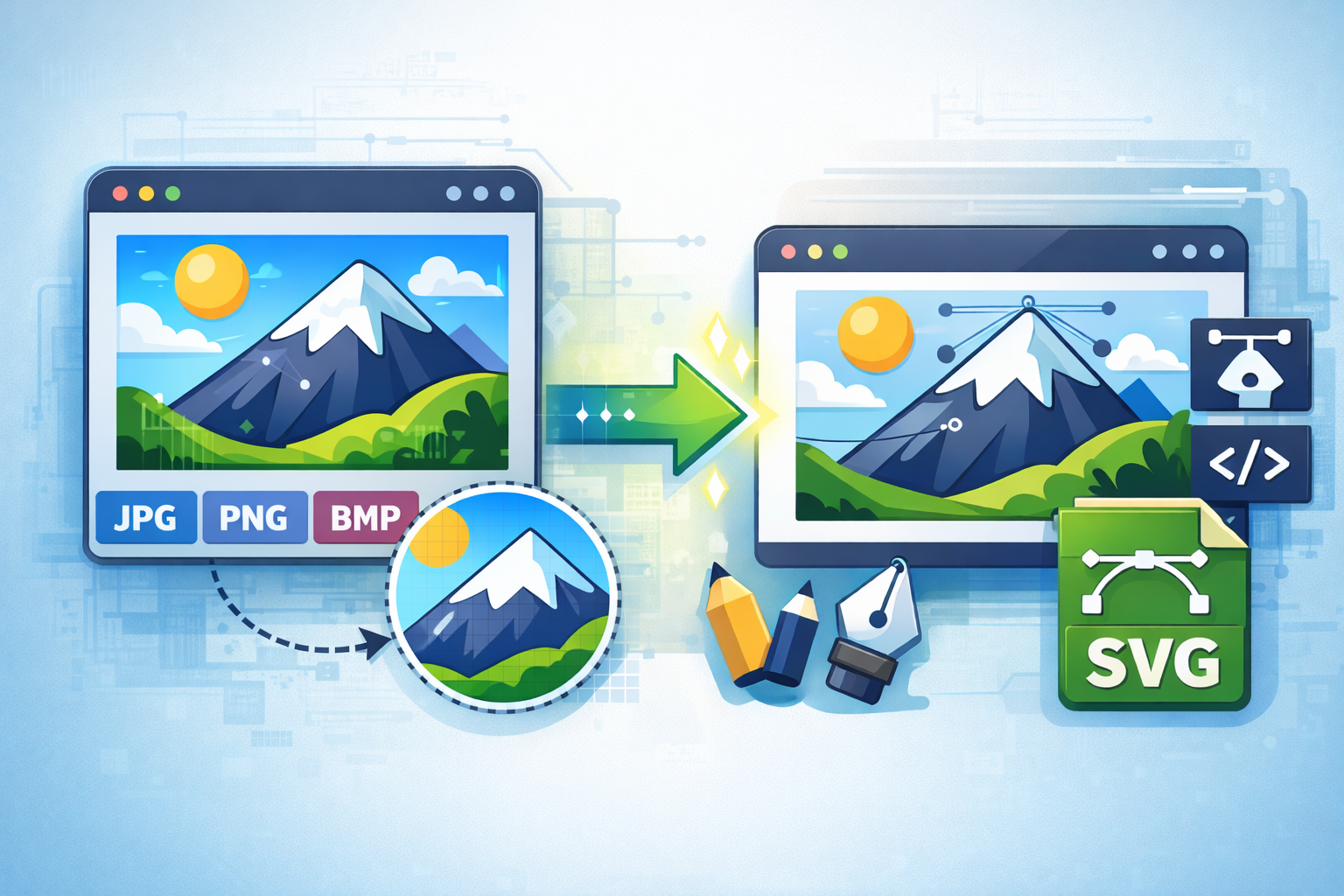
Digital photos come in many different formats. Sometimes, you’ll need to convert an image to be compatible with software, decrease size of the file, upload it online or increase the quality of your image. The process of learning easy ways to convert photos on your Computer can help you save time, space, and stress.
Photo conversion is simply changing one format of file into another format. For instance, changing an image from a PNG image to a JPEG or converting a massive TIFF file into small WebP image.
A lot of people believe that image conversion needs specialized software, but this isn’t accurate. In reality, your PC already has tools to perform the task. There are a variety of free online programs and services which make the process quick and simple.
In this article you’ll find beginner-friendly techniques as well as helpful tools and professional tips for converting images quickly and without losing their quality.
Why You Might Need to Convert Photos on Your Computer
There are many reasons one might decide to convert their images into a different format.
1. Reduce File Size
Large images eat up space and can slow websites. Converting the image to formats such as JPEG or WebP can help compress the image while maintaining the quality.
2. Improve Compatibility
Certain apps and platforms only support certain formats. For instance, websites typically use JPEG as well as PNG files.
3. Improve Image Quality
Certain formats such as TIFF provide more details that is ideal for printing or professional photography.
4. Upload Requirements
A lot of websites limit image size or formats. Converting your images will ensure that they conform to their requirements.
5. Easier Sharing
Images that are smaller are easier to send via messages or email apps.
Understanding these points helps you choose the best design for your needs.
Common Image File Formats Explained
Before converting images before conversion, it is important to understand the most popular formats for images.
JPEG vs PNG vs WebP
They are three of the most commonly used image formats currently.
JPEG (JPG)
-
Small size file
-
The best for photos
-
Uses lossy compression
PNG
-
Helps to promote Transparency
-
Better quality than JPEG
-
Larger file sizes
WebP
-
Modern web format
-
Excellent compression
-
Less in size JPEG and PNG
Web developers typically prefer WebP because it loads quicker on web pages.
TIFF and BMP for High-Quality Images
Professional photographers may employ larger sizes.
TIFF
-
Very high-end
-
Printing and editing
-
Very big file size
BMP
-
Basic image format
-
No compression
-
Most often employed in earlier Windows operating systems
These formats are perfect to edit but not ideal for sharing in everyday situations.
Simple Ways to Convert Photos on Your Computer
There are a lot of easy ways to convert photos to your Computer The majority of them only take some seconds.
Let’s look at the most efficient ways to do it.
Method 1: Using Built-in Windows Tools
Windows comes with a basic image viewer dubbed Photos.
Steps:
-
Open the photo in your Photos app.
-
Click Save As.
-
Select the format you prefer (JPEG, PNG, etc. ).
-
Save the file.
Another alternative could be Microsoft Paint.
Steps:
-
Start the picture in Paint.
-
Click File – Save As.
-
Choose a format such as JPEG, PNG, or BMP.
This is among the most simple methods to convert images without needing to install any software.
Method 2: Using macOS Preview
Mac users can convert images fast by using their Preview application.
Steps:
-
Open the image within the Preview.
-
Click File – Export.
-
Select the appropriate format.
-
Save the image that was converted.
Preview allows you to adjust the settings for quality as well as compression level.
Method 3: Using Online Photo Converters
These online applications are fantastic if you don’t need to install any software.
The most popular websites include:
-
Convertio
-
CloudConvert
-
Online-Convert
One useful resource is
https://cloudconvert.com
Steps:
-
Upload your photo.
-
Choose your output type.
-
Download the file that was converted.
Online converters can support a variety of formats such as PNG, JPG, TIFF and WebP.
Method 4: Using Free Image Editing Software
Free programs include higher-quality features.
Some of the most popular choices are:
-
GIMP
-
Paint.NET
-
IrfanView
These programs can:
-
Batch conversion
-
Image resizing
-
Quality adjustments
-
Advanced editing
For instance, GIMP lets you export images in a variety of formats.
Method 5: Batch Converting Photos
If you are required to convert multiple images at the same time Batch conversion can save time.
Applications like IrfanView let you to convert thousands of images in a matter of minutes.
Steps:
-
Open the batch converter tool.
-
Create several images.
-
Choose the output format.
-
Begin the process of conversion.
This is extremely helpful for photographers and webmasters.
Best Free Tools to Convert Photos
Many free tools aid in photo conversion.
Image Editing Software Options
| Tool | Best For | Platform |
|---|---|---|
| GIMP | Advanced editing | Windows, Mac, Linux |
| Paint.NET | Simple editing | Windows |
| IrfanView | Batch conversion | Windows |
Online Conversion Platforms
Online tools require no installation.
Advantages:
-
Quick conversion
-
Supports various formats
-
Works with any device
Disadvantages:
-
Internet connection is required.
-
Security concerns with sensitive images
Step-by-Step Guide to Convert Photos Quickly
overcoming stress’s an easy, universal procedure:
-
Open your photo in a photo editor or viewer.
-
Click Save As or Export.
-
Select the preferred format.
-
Adjust the quality settings.
-
Save the file that you converted.
This technique works with all software programs.
Tips for Maintaining Image Quality During Conversion
Improperly converted images could reduce the quality of your images. Be sure to follow these guidelines:
-
Do not convert the same image
-
Make sure you use high-quality settings.
-
Save the original files
-
Pick the best format for your task
-
Avoid excessive compression
By keeping the original image, you are able to convert it again without sacrificing detail.
Common Mistakes When Converting Photos
A lot of beginners make mistakes when they convert images.
1. Losing Image Quality
Repeated JPEG conversions reduce quality.
2. Choosing the Wrong Format
For example, use JPEG to create images that require transparency.
3. Ignoring Resolution
Images of low resolution look blurry when viewed on large screens.
4. Over-compressing Files
Extreme compression creates visible artifacts.
By avoiding these mistakes, images remain crisp and professional.
Security and Privacy Considerations
When using online tools, you must be aware of your privacy.
Tips:
-
Be wary of uploading personal images to untrusted websites
-
Use trusted services
-
Remove files following conversion
-
Choose offline tools for sensitive images
Security is particularly important for private or business photos.
When to Use Different Image Formats
Selecting the best format is dependent on the intended purpose.
| Use Case | Recommended Format |
|---|---|
| Websites | WebP or JPEG |
| Graphics that have transparency | PNG |
| Professional editing | TIFF |
| Simple images | JPEG |
Selecting the right format can improve the performance and quality.
Frequently Asked Questions
1. What is the simplest method to convert images using computers?
The easiest way to do this is by using the built-in tools such as Windows Photos, Paint, or macOS Preview.
2. Can I convert images without the need for software?
Yes. Online converters let you transfer images to download them in different formats.
3. Does converting photos reduce quality?
It varies based on the compression and format. Converting to JPEG multiple times can decrease quality.
4. Which is the most suitable format for web pages?
WebP as well as JPEG are widely used due to the fact that they are small files with high quality.
5. How do I convert a lot of images at once?
Make use of tools for batch conversion, like IrfanView as well as GIMP.
6. Is it secure to utilize Online image conversion software?
The most trusted platforms are safe however, you should avoid uploading personal images to untrusted sites.
Conclusion
The process of learning easy ways to convert images on your Computer will simplify managing photos. If you’re creating images for your website, cutting down the size of your files, or enhancing functionality, photo conversion is an essential ability.
The good thing is that you don’t require expensive software to achieve this. Tools built-in to the OS like Windows Photos or macOS Preview are perfect for the majority of users. Free software such as GIMP and IrfanView give you more options, specifically to batch convert.
Understanding the various formats of images and choosing the appropriate tools and avoiding common mistakes it is possible to convert images quickly, while keeping the quality of your images.
Anyone, from novices to experts can handle the conversion of photos with ease and effectiveness.