
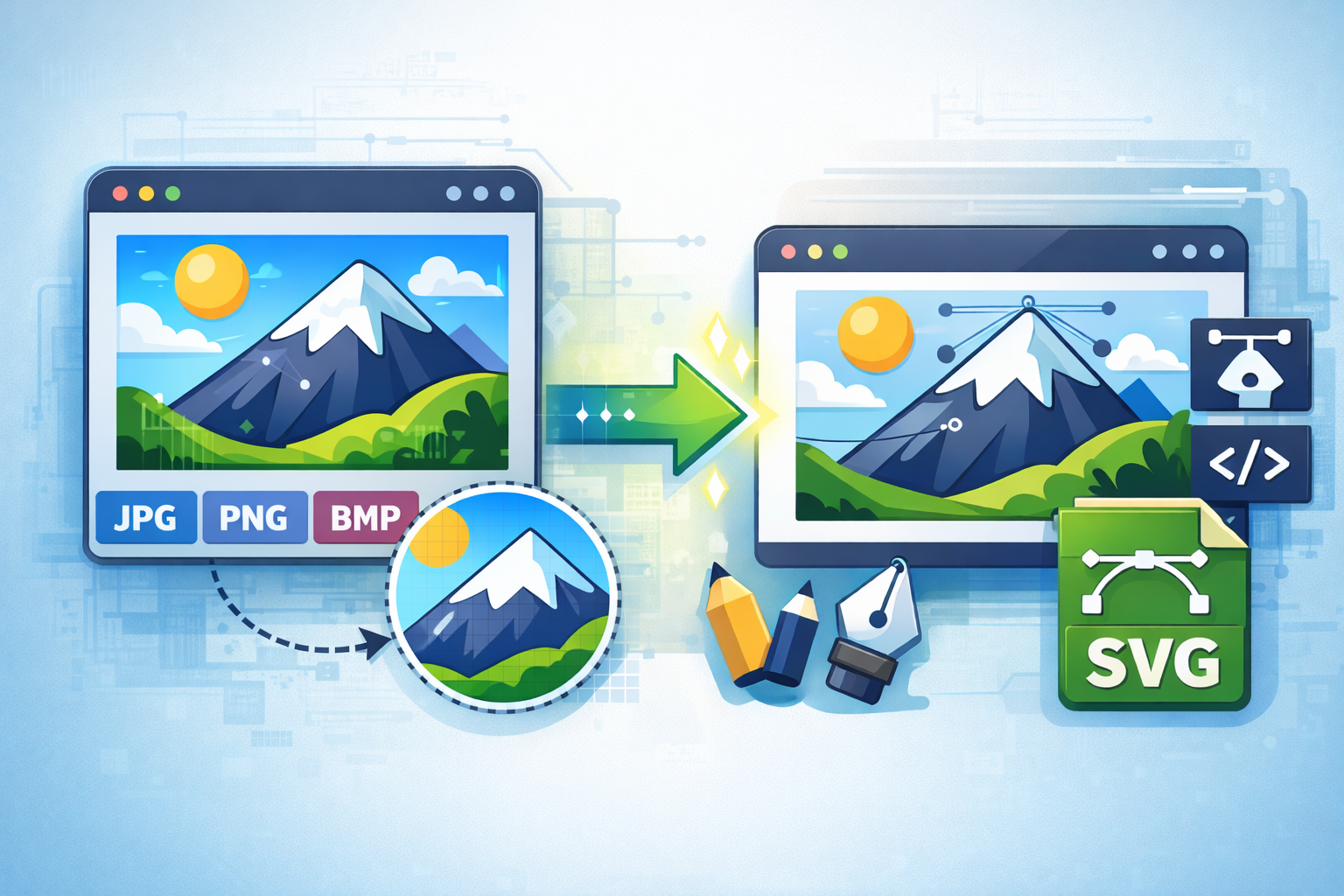
Images are all over the web, from blog posts and social media, to websites and other digital marketing materials. Sometimes, however, you’ll require converting images into one type of format before converting it to another format. This could include changing a PNG to the format of a JPG to decrease the size of a file or changing the JPG to the format of a WebP to speed up web page performance.
Understanding easy methods to change the types of images in your computer will help you save time, increase the compatibility of images, and also optimize images for various platforms. The best part is you do not require sophisticated technical expertise to accomplish it. If you have the proper tools along with easy techniques, anyone can be able to convert images in just a few minutes.
In this comprehensive guide, you’ll learn the most effective techniques, tools, best practices and common blunders to avoid when switching types of image files.
Understanding Image File Types
Before you can learn about conversion techniques it is essential to know the different types of image files and what they mean.
Image formats define the method by which pictures are saved, compressed and displayed. Different formats serve different purposes.
Common Image Formats
| Format | Best For | Key Features |
|---|---|---|
| JPG / JPEG | Images from photography and images on the web | Small file size Small file size, lossy compression |
| PNG | Images and graphics that are transparent | Compression that is lossless |
| GIF | Images animated | Limited colors |
| WebP | Websites and optimization of performance | Quality, smaller size |
| BMP | Raw image storage | Large file size |
| TIFF | Printing and professional photography | High-end |
Each format is a balance of quality, size and compatibility that is why switching between formats is frequently essential.
Why You Might Need to Change Image File Types
It’s not just about compatibility. There are many reasons to do this.
1. Reduce File Size
Certain formats are better at compressing images. Making the conversion from PNG to JPG will dramatically reduce the file size.
2. Improve Website Speed
Modern formats such as WebP aid in loading websites quicker.
3. Ensure Compatibility
Certain platforms need specific formats.
4. Enable Transparency
PNG has transparent backgrounds, unlike JPG does not.
5. Optimize Images for Social Media
Different platforms suggest specific sizes and formats.
Easy Methods to Change Image File Types
There are a variety of methods to convert images. Certain methods require software and others are done on the internet.
Using Built-in Tools on Your Computer
Many computers already have programs which can convert images into different formats.
Windows – Using Paint
Microsoft Paint makes conversion simple.
Steps:
- Start the picture in Paint
- Click File
- Select Save As
- Select the preferred file format (PNG, JPG, BMP and so on.)
- Save the file you just created.
This technique is great to convert quickly.
Mac – Using Preview
Mac Users can also convert their images with the Preview application.
Steps:
- View the photo in preview
- Click File
- Select Export
- Select the format from the drop-down menu
- Save the file that was converted
Preview supports a variety of formats, such as PNG, JPEG, and TIFF.
Convert Image File Types Using Online Tools
Online converters are among the most efficient methods of changing the types of images in your files.
The tools let users upload a photo and download the image in another format.
Popular Online Image Converters
| Tool | Features |
|---|---|
| CloudConvert | Supports a variety of formats |
| Convertio | Simple drag-and-drop interface |
| Online-Convert | Advanced options for customization |
You can test an authentic converter such as
https://cloudconvert.com
Advantages
- No software installation
- Supports a variety of formats
- Quick conversion
Disadvantages
- Requires an internet connection
- Might have limits on file size
Using Image Editing Software
Professional image editors offer greater control over conversions.
Adobe Photoshop
Photoshop lets you export images in different formats.
Steps:
- Open the image
- Click File – Export – Export As
- Choose the appropriate format
- Adjust the quality settings
- Save the file
This technique is perfect for situations where quality control is crucial.
GIMP (Free Alternative)
GIMP is a powerful and free image editor.
Steps:
- Open the image
- Click File – Export As
- Choose a new format
- Export the image
It supports formats such as JPG, PNG, WebP as well as TIFF.
Using Mobile Apps to Convert Image Formats
If you’re working with smartphones, there are several applications that allow you to convert images effortlessly.
Best Image Converter Apps
| App | Platform |
|---|---|
| Image Converter | Android |
| The Image Converter | iOS |
| File Converter | Android |
These apps let you make rapid format changes directly via your mobile.
Batch Converting Multiple Images
If you have to convert a large number of images at the same time using batch conversion tools, they can help save time.
Best Batch Conversion Tools
- XnConvert
- IrfanView
- ImageMagick
Batch conversion lets users handle many images at once.
This is especially helpful for web developers and photographers.
How to Convert Images to WebP for Better Performance
WebP is becoming more popular due to its superior compression and quality.
Benefits include:
- Smaller file sizes
- Faster website loading speeds
- High image quality
Many image converters support WebP.
Web developers frequently transform JPG and PNG files into WebP to boost performance.
Tips for Maintaining Image Quality During Conversion
Converting images may lower the quality. In order to avoid that, adhere to these steps:
1. Avoid Repeated Conversions
Repetition of conversion between lossy formats could decrease the quality.
2. Begin with high-quality images
Images with higher resolution yield more effective results.
3. Use Lossless Formats When Needed
Formats like PNG or TIFF save image data.
4. Adjust Compression Settings
Numerous tools allow you to monitor the quality of images.
Common Mistakes When Changing Image Formats
Even simple conversions could be a disaster when you’re not vigilant.
1. Losing Transparency
The conversion of PNG into JPG eliminates backgrounds with transparent colors.
2. Using the Wrong Format for Web
Large formats such as TIFF can slow websites.
3. Excessive Compression
A lot of compression can result in blurred images.
4. Ignoring Metadata
Certain converters erase metadata, such as EXIF information.
5. Not Keeping Backup Files
Always save the original image when you convert.
Best Image Formats for Different Use Cases
The format you choose depends on the purpose for which the image is going to be utilized.
| Use Case | Best Format |
|---|---|
| Websites | WebP or JPG |
| Logos | PNG |
| Photography | JPG |
| Printing | TIFF |
| Animation | GIF |
The right format for your images will improve image quality and performance.
Security and Privacy When Using Online Converters
While online converters are useful however, you must consider security risks.
Tips for ensuring safety
- Make sure you are using only trusted websites
- Beware of uploading images that are sensitive
- Make sure to delete downloaded files If the website offers the option to do so.
Many converters will automatically erase files after a brief period of.
FAQs About Easy Methods to Change Image File Types
1. What is the most efficient method of changing the file types for images?
The most efficient method is to use the built-in tools such as Paint for Windows as well as Preview in Mac. Converting online is also simple to use.
2. Can I convert image formats without losing quality?
Yes. It is possible to convert to non-lossless format like PNG or TIFF ensures that the quality of images are maintained.
3. Is WebP better than JPG?
WebP typically offers smaller file sizes but maintains the same quality, which makes it a great choice for websites.
4. Are online image converters safe?
Most trusted tools are safe, however, ensure that you use reliable websites and refrain from uploading sensitive files.
5. Can I convert multiple images at once?
Yes. Conversion tools for batch such as XnConvert let users convert multiple images at once.
6. Why does my image quality drop after conversion?
Quality loss is experienced when switching from the lossy format or when using the highest compression setting.
Conclusion
Knowing Simple Methods to Change Images File Types will make managing images easier. When you’re preparing images for your website or printing photos or converting them for social media, having the proper format can make a huge difference.
Converting image formats is simple with the tools available today. The built-in software such as Paint and Preview are able to handle simple conversions as well as online converters and professional editing software can provide more flexibility. For bigger projects batch conversion tools could help you save time.
By selecting the appropriate layout, while preserving the image quality and avoiding common errors You can make sure your photos look stunning and work well across different platforms.
Learning these methods can help you work more efficiently and improve the performance of your website, and keep professional images on any website.