
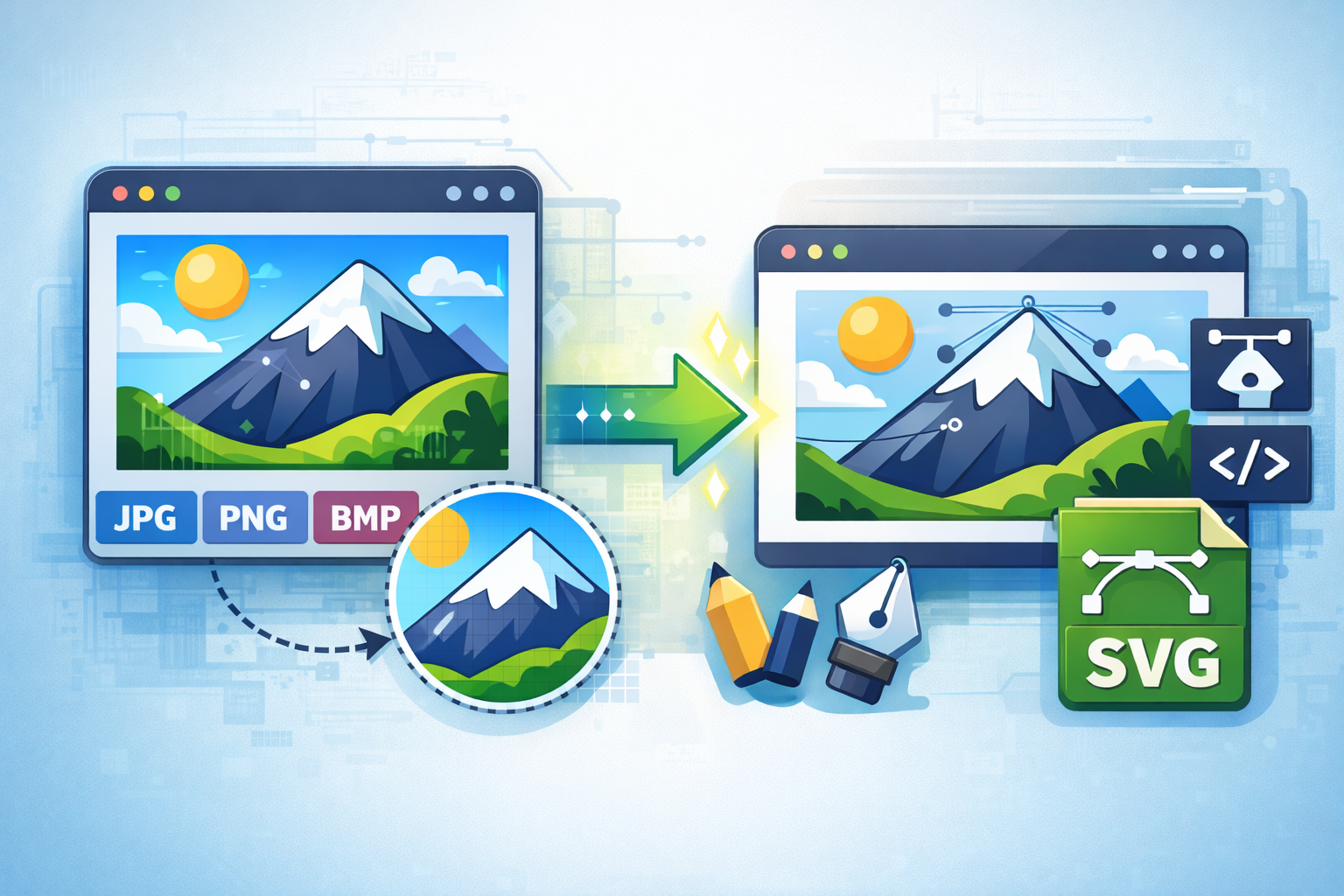
Introduction
Images play an important function in contemporary digital projects. When you’re developing an online site, creating an app for mobile devices, developing marketing materials, or releasing material online, the the format you choose will directly impact the quality, speed of loading as well as the size of your storage and the user experience.
Many creators don’t realize how important it is to choose the right format. But, How to Choose the appropriate image format to Use for Your Project is a technique that will dramatically boost performance, particularly for websites and digital items.
Different formats serve different purposes. For instance, some formats are ideal for photography, while others are ideal are great for logos and graphics and others are specifically designed to optimize web pages.
In this complete guide, you’ll be taught:
- The most commonly used images and their formats as well as their applications
- How do you optimize images for performance
- Avoiding mistakes when choosing formats
- Tools to transform and compress images
- Best techniques for developers, designers and marketers
In the end you’ll know what format is best for your particular project.
Why Image Format Matters in Digital Projects
The choice of the appropriate image format will impact a variety of key aspects of your work:
1. Website Performance
Large images can cause slowdown in loading of websites. Faster websites enhance user experience as well as SEO rankings.
2. Image Quality
Different formats deal with detail as well as compression and color depth in a different way.
3. Storage Efficiency
Certain formats shrink the size of files substantially, without any noticeable quality loss.
4. Compatibility
There aren’t all formats that work on all platforms or browsers.
For instance web designers need to consider quality and size of files Graphic designers focus on the finer details and editing flexibility.
Overview of the Most Common Image Formats
Understanding the most common format is the very first step to knowing how to choose the right image format for your Project.
| Format | Best Use | Key Feature |
|---|---|---|
| JPEG (JPG) | Photographs | High compression |
| PNG | Graphics and transparent images | Lossless quality |
| GIF | Simple animations | Limited colors |
| WebP | Modern web images | High compression and high quality |
| SVG | Logos & vector graphics | Scalable with no quality loss |
| TIFF | Archiving and printing | Very high-end |
| BMP | Raw images | Large file size |
Each design has strengths and weaknesses according to the requirements of your project.
JPEG (JPG): Best for Photographs
JPEG is among the formats that is most commonly used on the internet.
Key Characteristics
- Makes use of compressed lossy
- Produces small files
- Colors are supported by millions
Best Use Cases
- Photos of the Website
- Images of social media
- Digital photography
Advantages
- Excellent compression
- Supported by the entire world
- Ideal for images that are complex
Limitations
- Quality declines following repeated editing
- There is no support for transparency
JPEG is often the preferred option for photography in mobile and web projects.
PNG: Best for Graphics and Transparency
PNG is a popular format for images that require clear edges and transparency.
Key Characteristics
- Compression lossless
- It supports transparency of backgrounds
- Keeps its high-quality
Best Use Cases
- Logos
- Icons
- UX elements
- Illustrations
Advantages
- High-clarity
- No quality loss during editing
- Transparent backgrounds
Limitations
- File size is larger compared to JPEG
PNG is most effective in situations where transparent edges as well as sharp edges are more important than the file’s size.
GIF: Best for Simple Animations
GIF was around from the beginning times of internet, but is still popular for simple animations.
Key Characteristics
- Animation support
- Limited to 256 colors
- Compression that is lossless
Best Use Cases
- Memes
- Simple animations
- UI indicators
Advantages
- Easy animation Support
- Small files to create simple graphics
Limitations
- Not ideal for photos of high-quality.
- Limited color depth
WebP: The Modern Web Image Format
WebP is a brand new format that was developed by Google to improve the performance of modern websites.
Key Characteristics
- Provides Lossy as well as lossless compression
- Less large file sizes are smaller than JPEG and PNG
- Supports animation and transparency
Advantages
- Faster website loading
- Superior quality, but smaller in size
- Perfect for responsive websites.
Limitations
- Older browsers may not work with it in full
A lot of modern websites use WebP as their primary image format..
SVG: Best for Logos and Vector Graphics
The SVG (Scalable Vector Graphics) is distinct from pixels-based formats.
Key Characteristics
- Vector-based
- Infinitely scaling
- Very small size of file
Best Use Cases
- Logos
- Icons
- Charts
- Illustrations
Advantages
- Perfect for responsive design
- Crisp and clear at any resolution
- Editable via code
Limitations
- Unsuitable for photographs
SVG is a great choice for design elements that need to be scalable to fit across different devices..
TIFF: High-Quality Images for Printing
TIFF is used extensively for professional printing and photography.
Key Characteristics
- Extremely high resolution
- Storage without loss
- Large file size
Best Use Cases
- Professional photography
- Print publishing
- Image Archiving
Advantages
- Exceptional image quality
- Perfect to edit
Limitations
- Large files
- Not web-friendly
How to Choose the Right Image Format for Your Project
The best format to choose depends on the objectives of your project.
we explore the fascinating world of the mind—breaking down psychology concepts into simple are some of the crucial elements:
1. Purpose of the Image
Do you ask yourself:
- Does it look like a photograph?
- A logo?
- A cartoon?
2. File Size Requirements
Websites need smaller files to load faster.
3. Transparency Needs
If you require transparency PNG or WebP are the most suitable.
4. Scalability
If you want icons and logos, SVG is the best alternative.
5. Editing Needs
If you intend to edit a lot then you should choose lossless formats.
Image Optimization Techniques
Even with the best design, optimizing is crucial.
Compression
Reduce the file size, while maintaining the quality.
Resizing
Do not upload images that are bigger than the ones you need.
Lazy Loading
Images are loaded only when scrolling users.
Responsive Images
Serve different image sizes for different devices.
To learn more about optimizing websites look up sources on
https://developers.google.com/web/fundamentals/performance/optimizing-content-efficiency/image-optimization
Tools for Image Conversion and Optimization
A variety of tools can assist in managing the various formats of images efficiently.
Online Tools
- TinyPNG
- Squoosh
- ImageOptim
Design Software
- Photoshop
- GIMP
- Affinity Photo
Developer Tools
- Webpack Image Loader
- ImageMagick
- Cloudinary
These tools can in converting formats as well as compressing files with no any noticeable quality loss.
Common Mistakes When Choosing Image Formats
A lot of projects are plagued by ineffective performance because of simple errors.
1. Using PNG for Large Photos
PNG files are larger than JPEG.
2. Ignoring Compression
Websites with uncompressed images are slower.
3. Uploading Oversized Images
Large images consume bandwidth.
4. Using GIF Instead of Video
GIFs are not efficient for large animations.
5. Ignoring Modern Formats
Formats such as WebP significantly increase performance.
Making sure to avoid these errors will ensure higher performance and a better the user experience.
Best Practices for Designers and Developers
To always select the most effective format:
- Make use of JPEG to take photos
- Make use of PNG to create transparent graphics.
- Make use of SVG to create logos
- Make use of WebP to access modern websites.
- Convert images before uploading
- Always test the speed of loading images
These techniques improve performance as well as image quality.
FAQs
1. What is the most suitable image format for web pages?
WebP is usually the best option because it provides excellent compression, with top quality.
2. What is the best time to utilize PNG in place of JPEG?
Utilize PNG whenever you require clarity or sharp graphics such as logos.
3. Does SVG have more value than PNG?
For icons and logos, SVG is better because it scales without compromising quality.
4. Does image format affect SEO?
Yes. Optimized images can improve the speed of loading pages which improves search engine rankings.
5. How can I change images with no loss of quality?
Lossless formats such as PNG and TIFF enable conversions with very little loss of quality.
6. What is the reason why WebP image sizes smaller?
WebP utilizes advanced compression algorithms to reduce the size of files while preserving visual quality.
Conclusion
Knowing how to choose the right image format for your Project is vital for any person working using digital media. The correct format can improve performance quality and quality as well as the users’ experience.
Here’s a quick summary:
- JPEG – best for photos
- PNG is ideal for images that have transparency
- GIF – the best for basic animations
- WebP is ideal for websites that are modern
- SVG is ideal for scaling graphics
- TIFF is the best choice for printing high-quality
By choosing the appropriate format and using methods to optimize, you will be able to drastically enhance speed effectiveness, efficiency, and impact on the visual.
In the end, selecting the best image format isn’t only a technical choice, but crucial to deliver quality online experiences.