
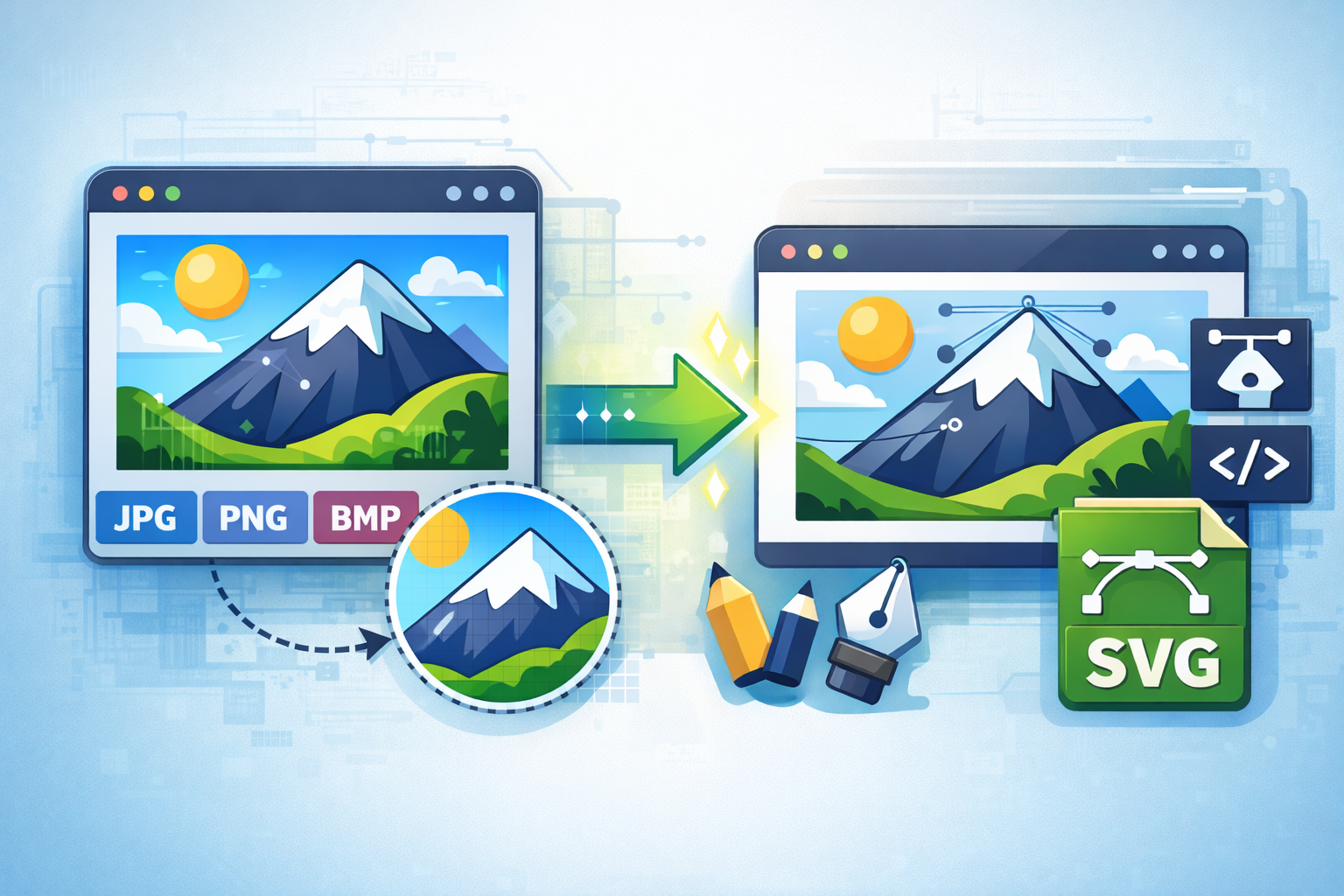
Introduction to Image Conversion
Images are everywhere, on websites as well as social media, presentation and marketing materials. However, sometimes the format isn’t the best fit for your requirements. Perhaps your site requires an enlargement of the file or you want transparent backgrounds. This is the reason how to convert images quickly by using online tools can be extremely helpful.
Image conversion lets you convert one format of file into another format without losing quality or having to install complicated software. With the help of modern tools on the web that allow you to convert images in just a few seconds with only an internet browser.
Image converters online are particularly well-known because they:
- Fast
- Easy to use
- Accessible to any device
- Usually, there is no cost
- No installation required
In this complete guide, you’ll be taught how to convert images quickly using online tools The most efficient platforms, the best practices to maintain quality, frequent mistakes to avoid and the answers to commonly asked questions.
Why Image Conversion Is Important
Image conversion plays an essential part when it comes to digital workflows. Different devices and platforms often require particular images in particular formats.
Website Performance
Websites must load quickly. Images with large sizes hinder page speed and can affect SEO rankings. Converting images to optimized formats such as WebP or compress JPG files can improve performance.
Compatibility Across Platforms
Certain devices or software programs only work with certain formats. Examples:
| Image Format | Best Use |
|---|---|
| JPG | Web images and photography |
| PNG | Graphics that are transparent |
| WebP | Modern web optimization |
| GIF | Images animated |
| SVG | Vector graphics |
Knowing how to convert images Quickly using Online Tools will to ensure compatibility across platforms.
Reducing File Size
Large images consume a significant amount of storage space. Converting them to compressed formats could reduce their the size by as much as 20% without noticing quality degradation.
Understanding Popular Image Formats
Before you can learn how to convert images quickly using online Tools It is helpful to know the most the most common formats.
JPEG / JPG
JPG is among the most popular formats for images. It makes use of lossy compression to decrease file size.
The best for:
- Photographs
- Web images
- Social media images
PNG
PNG can be transparent and provides higher quality images.
Ideal for:
- Logos
- Illustrations
- Graphics for the UI
WebP
WebP is a new format that was developed to improve the performance of websites.
Benefits include:
- Smaller file sizes
- High-end
- Support for transparency
GIF
GIF supports animation, however it has a limit on color depth.
Ideal for:
- Animations in short form
- Memes
- Reaction images
SVG
SVG is vector format that scales completely without losing quality.
Perfect for:
- Icons
- Logos
- Illustrations
How to Convert Images Quickly Using Online Tools
If you’re looking for how to convert images Fastly using Online Tools This procedure is actually quite easy. The majority of online converters follow the exact steps.
Step 1: Upload Your Image
Go to a trusted website for image conversion then upload your photo file.
Most platforms support formats like:
- JPG
- PNG
- GIF
- BMP
- TIFF
- WebP
Step 2: Select the Output Format
Select the format you wish to change your image to.
For instance:
- PNG – JPG
- JPG – WebP
- PNG – SVG
Step 3: Adjust Optional Settings
Certain tools permit further adjustments, for example:
- Compression level
- Image size
- Quality settings
These settings can help ensure optimal results.
Step 4: Convert the Image
Click the convert button, and take a few seconds to wait.
Step 5: Download the Converted Image
After processing has finished when processing is completed, save the updated image file onto your device.
The whole process typically is less than 10 seconds.
Best Online Tools for Image Conversion
A variety of trustworthy platforms provide how to convert images quickly using online tools simple.
1. CloudConvert
CloudConvert can handle more than 200 formats for files and provides advanced settings for conversion.
Key characteristics:
- Quality output
- Batch conversions
- Secure file processing
External Resource: https://cloudconvert.com
2. Convertio
Convertio is a well-known web-based application that is known for its easy-to-use interface.
Benefits include:
- Uploads via drag-and-drop
- Supports over 300 formats
- Cloud storage integration
3. Online-Convert
Online-Convert has advanced customization options.
Users can modify:
- Resolution
- DPI
- Color settings
- Compression
4. I LoveIMG
iLoveIMG is focused upon image edits and conversion.
The features include:
- Conversion of images in bulk
- Compression tools
- Image resizing
5. Zamzar
Zamzar is among the longest-running converters for files on the web.
Benefits:
- Email download option
- Multiple files support for multiple files
- Reliable performance
Advantages of Using Online Image Converters
The process of learning how to convert images efficiently using online tools has many benefits.
No Software Installation
Online converters are integrated directly into your browser. This means that there is no necessity for downloading software.
Cross-Platform Compatibility
Images can be converted on:
- Windows
- Mac
- Linux
- Smartphones
- Tablets
Instant Processing
Most conversions are completed in several seconds.
Free Access
A number of platforms provide free conversions to commonly used file formats.
Tips for Maintaining Image Quality During Conversion
Image quality is usually an issue when converting files.
Follow these guidelines to keep images clear.
Choose the Right Format
Different formats serve different purposes.
Example:
- Use PNG to enhance transparency.
- Make use of JPG images for photos.
- Utilize WebP for optimization of your web site.
Avoid Excessive Compression
Heavy compression reduces image quality.
Use compression levels that are balanced.
Use High Resolution Originals
Always convert to the best quality version of the image.
It is much easier to downscale later than restoring detail lost.
Common Mistakes to Avoid When Converting Images
Although how to convert images quickly using online Tools is not difficult but beginners aren’t immune to mistakes.
Ignoring File Size Limits
Certain platforms restrict uploads to certain size.
Always verify the maximum permissible file size.
Choosing the Wrong Format
If you choose a format that isn’t suitable, it could decrease the quality or even eliminate crucial characteristics such as transparency.
Overwriting Original Files
Always save the original file for backup.
Using Untrusted Tools
Certain websites might not compress images properly or include ads and malware.
Make sure to use reliable converters.
Security Considerations When Uploading Images
It is important to be secure when using online tools.
Check Privacy Policies
Ensure that the platform deletes the uploaded files following processing.
Avoid Uploading Sensitive Images
Never upload private or confidential images to websites that are not yours.
Use HTTPS Websites
Secure platforms rely on secure connections to safeguard uploads.
Batch Image Conversion for Faster Workflow
If you have a lot of pictures, batch conversion can save time.
Many online tools let you upload multiple files at the same time.
Benefits include:
- More efficient processing
- Reduction of repetitive tasks
- Formats for output that are consistent
Batch conversion is particularly helpful to:
- Image optimization for websites
- Social media content
- Digital marketing assets
How to Optimize Converted Images for SEO
Images influence search results more than most people are aware of.
Use Descriptive File Names
Example:
Instead of
IMG1234.jpg
Use
blue-running-shoes.jpg
Compress Images for Faster Loading
Speed of pages is a factor in ranking.
Smaller images help websites load quickly.
Add Alt Text
Alt text can help search engines recognize the content of images and increases accessibility.
Advanced Image Conversion Features
Certain tools offer advanced features above and beyond the basic conversion.
Image Resizing
Convert images automatically to a larger size during the conversion.
Metadata Removal
Remove metadata from files reduces the size and also protects privacy.
Color Profile Conversion
This will ensure that images appear properly across devices.
Future Trends in Online Image Conversion
Image technology is constantly developing.
The upcoming trends include:
- AI-powered compression of images
- Automated optimization of format
- Faster cloud processing
- Improvements to WebP as well as AVIF support
These new technologies can enable the process of converting images Fastly using Online Tools even more simple and efficient.
Frequently Asked Questions (FAQs)
1. What is the most efficient method of converting images online?
Utilizing a browser-based converter such as CloudConvert or Convertio lets images be converted quickly without having to install any software.
2. Are online image converters safe?
Most trusted converters are safe. However, users should be wary of uploading sensitive images and make sure the website is using HTTPS encryption.
3. Can I transform multiple images at one time?
Yes. A lot of online tools support batch conversion. This allows customers to convert and upload several images at the same time.
4. Does converting images reduce quality?
The quality of the image is determined by the format and the compression settings. The lossy formats such as JPG decrease quality a bit however PNG retains its higher quality.
5. What is the most effective web design format?
WebP is one of the top formats as it is high-quality and has smaller size files.
6. Do online converters support mobile devices?
Yes. Many tools work on tablets and smartphones via mobile browsers.
Conclusion
Understanding how to convert images quickly using online tools can drastically improve your workflow in digital. If you’re a blogger marketer, designer or even a website owner the ability to rapidly alter image formats can save time and increases efficiency.
Online image converters are an efficient solution without the necessity of a complicated software installation. In just a few clicks you can convert images into the format that’s best for the project you are working on.
With the right tools, choosing the right formats and avoiding common mistakes You can ensure the quality of your images while maximizing performance.
With technology continuing to advance images conversion tools are expected to become more efficient, faster and more powerful, making the creation of digital content more smooth as never before.